
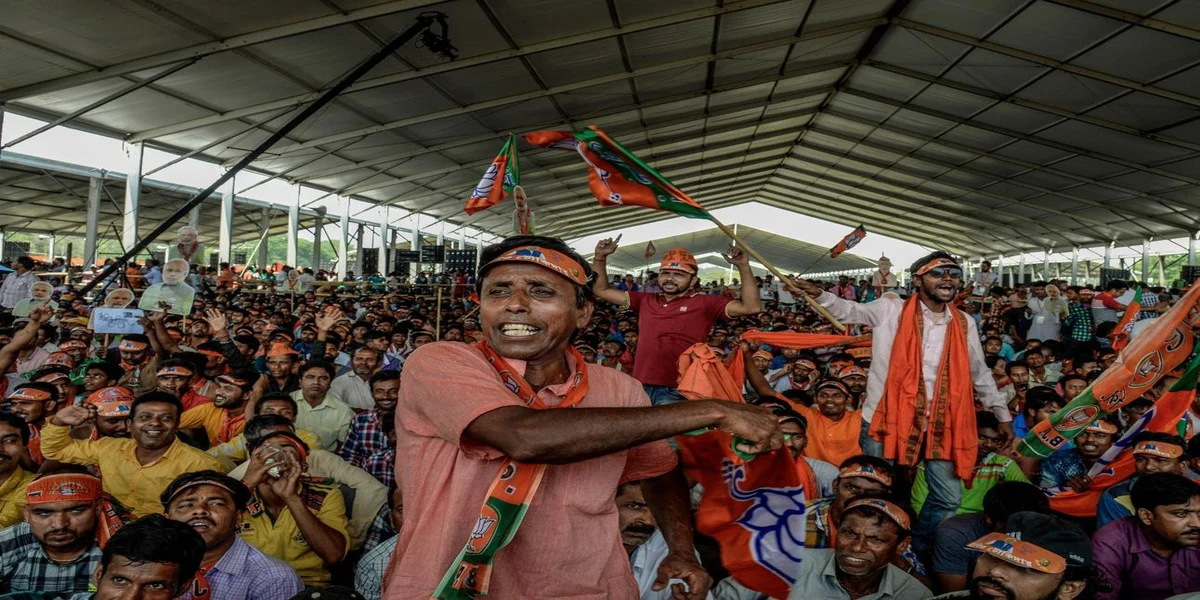
Bengal Didn’t Change Overnight—It Evolved
The West Bengal political shift 2026 is often described as sudden, dramatic, and unexpected. But in reality, it is none of those things.
This shift has been building quietly for decades.
From the ideological dominance of the Communist Party of India (Marxist) to the welfare-driven governance of the Trinamool Congress, and finally to the rise of the Bharatiya Janata Party—Bengal’s politics reflects a deeper transformation.
This is not just a BJP win West Bengal analysis.
It is a story of:
- Changing expectations
- Evolving voter mindset
- Emotional narratives
- And a constitutional moment that tested democratic norms
https://reuters.com/world/india
Phase 1: The Left Era (1977–2011) — Stability, Ideology, and Its Limits
For over three decades, West Bengal was governed by the Left Front led by the CPM.
What Defined This Era
- Strong land reforms
- Organized cadre-based governance
- Deep ideological identity
Graph: Left Dominance
1977   ███████████████████
1990   ██████████████████
2005   ████████████████
2010   ██████████████
The Deeper Reality
The Left succeeded because it addressed the needs of its time—especially rural empowerment and stability.
But by the 2000s, a new question emerged:
What comes next?
Young voters began prioritizing:
- Jobs
- Economic growth
- Mobility
The gap between ideology and aspiration slowly widened.
Phase 2: TMC Era (2011–2026) — Welfare, Identity, and Emotional Politics
The rise of Mamata Banerjee changed Bengal’s political tone.
What Worked
- Welfare schemes (Kanyashree, Lakshmir Bhandar)
- Strong grassroots connection
- Regional identity politics
Graph: TMC Influence
2011   ███████████████████
2016   █████████████████████
2021   ███████████████████
2026   ███████████████
The Turning Point
Initially, welfare created loyalty.
But over time:
Loyalty turned into expectation
Support turned into demand
This transition is central to understanding the TMC defeat reasons 2026.
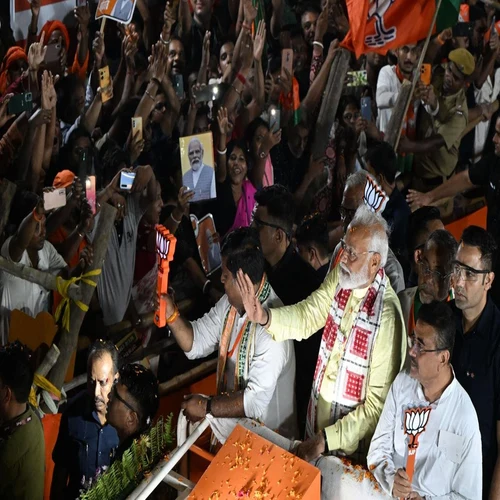
Phase 3: BJP Rise in West Bengal — The Politics of Aspiration
The rise of the BJP was gradual but strategic.
Graph: BJP Growth
2011   █
2016   ██
2021   ███████
2026   █████████████████████
Why BJP Succeeded
- Focus on development and jobs
- Strong organizational expansion
- Appeal of leadership like Narendra Modi
The Real Story: Why Did BJP Win?
Let’s move beyond headlines and look at what really drove this outcome.
1. A Quiet but Strong Desire for Change
Sometimes elections aren’t won by grand promises—they’re won by a simple feeling: “It’s time.”
After over a decade of TMC rule, many voters—especially in urban and semi-urban areas—began to feel that things had plateaued.
People weren’t necessarily angry.
But they were restless.
“We’ve seen this government long enough”
“What’s next for jobs?”
“Where is growth going?”
This quiet sentiment slowly turned into a decisive shift.
2. BJP Learned From Its Past Mistakes
If you look at the 2021 elections, BJP came close—but not close enough.
This time, they came prepared.
Stronger booth-level networks
Better coordination among local leaders
More focus on constituency-specific issues
Instead of relying only on big rallies, they worked from the ground up.
And that made a big difference.
3. The Modi Factor Still Matters
Like it or not, Narendra Modi remains one of the most influential political figures in India.
In Bengal, his appeal worked in a specific way:
He represented a larger national vision
He symbolized strong leadership
He connected with first-time voters and aspirational groups
For many voters, this election became more than local—it became about choosing between state vs national direction.
4. Youth Aspirations Took Center Stage
One of the biggest undercurrents in this election was the youth vote.
Young voters weren’t just looking for schemes—they wanted:
Jobs
Start-up opportunities
Infrastructure
Digital growth
BJP’s messaging aligned better with these aspirations.
And in a state with a large young population, that mattered.
5. Welfare vs Growth: The Big Debate
TMC has long been known for its welfare schemes. And to be fair, many of them worked.
But by 2026, a shift happened.
People started asking:
“What comes after welfare?”
“Where are the opportunities?”
BJP tapped into this transition effectively by focusing on development, industry, and investment.
6. Changing Social and Political Identity
West Bengal’s politics has always been unique—deeply rooted in culture, language, and regional pride.
But this election showed that identity is evolving.
National issues started influencing local decisions
Broader ideological narratives gained traction
Voters began aligning beyond traditional patterns
This shift played directly into BJP’s strengths.
Core Shift
The BJP aligned itself with a new voter priority:
Future over past
Opportunity over stability
Bengal Voter Mindset: The Real Game Changer
Graph: Mindset Evolution
Left Era:
Ideology        ███████████████████

TMC Era:
Welfare         ███████████████████

2026:
Jobs            ███████████████████
Growth          █████████████████
Opportunity     ███████████████
Insight
This election wasn’t about anger; it was about accountability—voters remembered the past and voted for what comes next.This progression was neither loud nor sudden. It was gradual, shaped by experience and exposure. Today’s voter evaluates choices differently. Loyalty is no longer inherited—it is earned.
The Women Who Redefined the Election
The most powerful story of the West Bengal political shift 2026 is not about parties.
It is about people.
And at the center of that story are the women of Bengal.
Ratna Debnath — When Personal Loss Became Political Power
Ratna Debnath’s story stands as one of the most emotionally powerful narratives of this election.
After a tragic personal loss linked to a widely discussed incident, her journey transformed from private grief to public voice.
She represented:
- Demand for justice
- Accountability from governance
- Emotional connection with voters
Her presence in the election symbolized:
When institutions fail, people step forward
Rekha Patra — Resistance from the Ground
Emerging from the Sandeshkhali controversy, Rekha Patra became a symbol of grassroots resistance.
Her story reflects:
- Courage against local power
- Voice of marginalized communities
- Political awakening at the ground level
Kilta Manjhi — The Voice Beyond Headlines
Kilta Manjhi represents:
- Tribal communities
- Rural women
- Silent voters
Her significance lies in showing that:
The shift was not limited to cities
It reached deep into rural India
From Beneficiaries to Decision-Makers
For years, women were seen as beneficiaries of welfare.
In 2026:
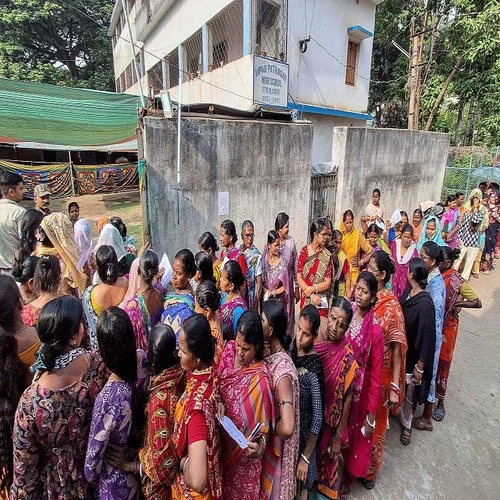
Women Voter Impact: From Beneficiaries to Decision-Makers
High Influence       ███████████████████
Moderate Influence   ███████████
Low Influence        ███

Perhaps the most defining factor of the West Bengal election 2026 was the role played by women. For years, women formed a strong support base due to welfare schemes that directly benefited them. However, this election revealed a deeper transformation.

Women did not abandon welfare. Instead, they expanded their expectations beyond it. Safety, dignity, and justice became central concerns. Public discourse around incidents and governance issues influenced perception in a way that went beyond economic benefits.

The stories of individuals such as Ratna Debnath, Rekha Patra, and Kilta Manjhi became symbolic of this shift. These were not just political narratives—they were human experiences that resonated across communities.

Their stories reflected a broader reality: when personal experiences intersect with public policy, political decisions become deeply emotional.

 Power, Perception, and Political Narratives

As the election approached, several narratives began to shape public perception. Names like Ajay Pal, Jahangir, and discussions involving Abhishek Banerjee appeared frequently in political conversations and campaign narratives.

These references often centered around debates on governance, local influence, and the functioning of political networks. While supporters and critics interpreted these narratives differently, they contributed to a broader perception of how power operated at various levels.

It is important to understand that such narratives are part of political discourse. They reflect how people interpret events rather than universally established facts.

 The “System” Debate and Trust in Governance

Another recurring theme was the idea of entrenched political systems. Critics argued that long periods in power can create strong local networks that influence governance. Supporters, on the other hand, viewed these structures as necessary for stability and continuity.

This debate extended to discussions about law enforcement, administration, and local governance. While not always backed by uniform evidence, these perceptions influenced how voters assessed trust and accountability.
Insight
Women voters shifted from:
Welfare → Safety → Accountability → Future
Hindutva in Bengal Politics & Cultural Identity
Discussions around Hindutva and Sanatan Dharma became more visible. Identity Politics: Between Hindutva and Muslim Thought.
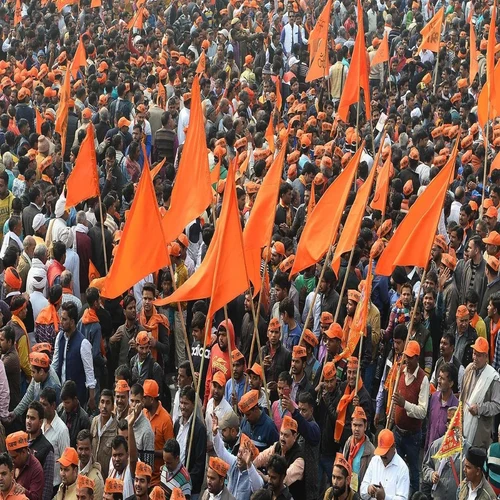
The West Bengal political shift 2026 also saw increased visibility of identity-based discussions. Narratives linked to Hindutva became more prominent, especially in campaign messaging that emphasized cultural heritage and identity.
At the same time, discussions around Muslim representation and political alignment remained significant. West Bengal’s demographic composition ensures that minority communities play an important role in shaping electoral outcomes.
Supporters of the TMC often viewed its leadership as inclusive and representative, while critics interpreted the same alignment differently. These contrasting perspectives highlight how identity politics operates on multiple levels.
Rather than being a single factor, identity discussions interacted with economic and governance issues, creating a complex electoral environment.
Balanced Understanding
- For some → cultural pride
- For others → concerns about inclusivity
This remains an evolving discussion
Voter Omission & System Influence
Topics discussed during the election included:
- Voter list concerns
- Institutional influence
Voter List Debate and “System Influence” Narrative - One of the most sensitive discussions surrounding the West Bengal election 2026 was the debate over voter lists and what some political voices described as “system influence.” During the campaign period, certain claims circulated in public discourse suggesting that a large number of names—sometimes cited in discussions as figures running into lakhs—were removed or altered in voter rolls. These claims became part of political narratives and were widely debated across media platforms and social conversations.
- However, it is important to approach such assertions with caution. The Election Commission of India is responsible for maintaining electoral rolls through periodic revisions, which include adding new voters, removing duplicate entries, and updating records based on migration or other administrative factors. Such processes are standard in any large-scale electoral system.
- While concerns about voter inclusion and exclusion were raised by different political groups, there is no universally verified evidence publicly confirming large-scale, deliberate removal of voters as a coordinated act. As a result, these discussions are best understood as part of political perception and contestation, rather than established fact.
- At the same time, perception itself can influence public trust. Even unverified concerns, when widely discussed, can shape how voters view the system. This makes the issue significant—not necessarily because of proven data, but because of its impact on confidence in the electoral process.
These are:
- Allegations / perceptions
- Not proven facts unless verified
Power, Perception, and Political Narratives
As the election approached, several narratives began to shape public perception. Names like Ajay Pal Sharma, Jahangir, and discussions involving Abhishek Banerjee appeared frequently in political conversations and campaign narratives.
These references often centered around debates on governance, local influence, and the functioning of political networks. While supporters and critics interpreted these narratives differently, they contributed to a broader perception of how power operated at various levels.
It is important to understand that such narratives are part of political discourse. They reflect how people interpret events rather than universally established facts.
Local Narratives, Power Structures and the Ajay Pal Sharma Discussion
As the West Bengal election 2026 unfolded, public discourse was not limited to party leaders and national figures. At the ground level, conversations often revolved around local actors, informal networks, and perceived power structures that influence how politics operates beyond official frameworks. Among the names that appeared in these discussions was Ajay Pal Sharma, whose mention surfaced in sections of political debate, particularly on social media and campaign narratives.
It is important to understand that references to individuals like Ajay Pal Sharma were not part of officially documented election processes, nor were they consistently supported by verified reports from credible institutions such as the Election Commission of India. Instead, these mentions formed part of a broader narrative about how local-level influence, coordination, and political networks are perceived to function during elections.
In highly competitive environments like West Bengal, where political engagement is intense and deeply rooted in society, such narratives often gain visibility. Supporters of different political sides interpret them differently—some view them as examples of entrenched systems or informal power channels, while others dismiss them as politically motivated claims or exaggerations. This divergence in interpretation reflects the complexity of Bengal’s political culture, where perception and experience can sometimes carry as much weight as documented fact.
The discussion around figures like Ajay Pal Sharma also connects to a wider theme that emerged during the election—the idea of a “system” or structured network influencing political outcomes at the grassroots level. Critics argued that long periods of political dominance can lead to strong local ecosystems of influence, while defenders maintained that such structures are part of normal political organization and governance continuity.
What makes this debate significant is not necessarily the verification of individual claims, but the impact of these narratives on voter perception. In modern elections, especially in a state as politically aware as West Bengal, perception plays a powerful role. Even unverified discussions can shape trust, influence conversations, and ultimately affect how voters interpret the political environment.
The “System” Debate and Trust in Governance
Another recurring theme was the idea of entrenched political systems. Critics argued that long periods in power can create strong local networks that influence governance. Supporters, on the other hand, viewed these structures as necessary for stability and continuity.
This debate extended to discussions about law enforcement, administration, and local governance. While not always backed by uniform evidence, these perceptions influenced how voters assessed trust and accountability.
Combined Factors Behind BJP Win West Bengal
Development        ███████████████████
Organization       █████████████████████
Women Vote         █████████████████
Youth Influence    █████████████████
Cultural Identity  ███████████████████
Perception Factors ███████████
Constitutional Crisis: Law vs Legitimacy
After the election, a major question emerged:
Can a Chief Minister continue after losing their seat?
What Article 164 Says
- CM appointed by Governor
- Can serve without being MLA for 6 months
- Must get elected within that period
S.R. Bommai Judgment
Majority in Assembly determines legitimacy
Constitutional Logic
Assembly Majority   ███████████████████
Legal Provision     ███████████████
Personal Mandate    █████████
The Core Question
Legal validity vs Moral legitimacy
Urban vs Rural Voting Trends
Urban:
BJP   ███████████████████
TMC   ███████

Rural:
TMC   ███████████
BJP   █████████████


Urban vs Rural Dynamics

The election also highlighted differences between urban and rural voting behavior. Urban areas showed a stronger inclination toward change, influenced by economic aspirations and exposure to broader narratives. Rural areas, while still connected to traditional support structures, also showed signs of gradual shift.

This convergence of urban and rural sentiment contributed significantly to the final outcome.
FAQ Section
Why did BJP win West Bengal in 2026?
Due to development focus, organizational strength, and changing voter mindset.
What are TMC defeat reasons 2026?
Rising expectations, women voter shift, and demand for growth.
https://prsindia.org
Did women influence the election?
Yes, significantly across all regions.
Did Hindutva play a role?
It was one of multiple factors.
Cultural Sentiment and Public Perception
Cultural issues, including discussions around temples, religious events, and administrative decisions, also entered the political narrative. Some viewed these decisions as governance-related, while others interpreted them symbolically.
In elections, perception often carries as much weight as policy. Even routine administrative decisions can take on broader mean
Can CM stay after losing election?
Yes, temporarily under Article 164.
Constitutional Crisis: Law vs Legitimacy:
After the election, a major constitutional question emerged. When a leader loses their own seat but continues to hold power, it creates both legal and political complexity.
Under Article 164 of the Constitution, a Chief Minister can continue in office for a limited period without being a member of the legislature, provided they secure election within six months.
However, the refusal to resign immediately sparked debate. While legally valid, the situation raised questions about moral legitimacy.
This created a dual reality. From a legal perspective, the continuation was justified. From a political perspective, it became a matter of public interpretatio
Post-Election Tension: The Madhyamgram Shooting and Its Political Impact
The story of the West Bengal election 2026 did not end with the announcement of results. In fact, for many observers, the days that followed revealed another layer of complexity—one shaped by tension, uncertainty, and competing political narratives.
A particularly shocking development came from Madhyamgram in North 24 Parganas, where Chandranath Rath, a close aide and personal assistant to Suvendu Adhikari, was shot dead in what police described as a violent attack carried out in a public space. Reports indicated that motorcycle-borne assailants opened fire at close range, leading to his death from multiple injuries.
The timing of the incident—coming shortly after the election results—immediately elevated its political significance. What might otherwise have been treated as a serious law-and-order case quickly became part of a broader political conversation about post-election climate, security, and governance.
Between Crime and Politics: Competing Interpretations
As details emerged, the incident was interpreted in sharply different ways by political stakeholders. Suvendu Adhikari described the killing as a “pre-planned attack,” suggesting that it may have been carried out after deliberate targeting. These claims, however, remain part of political assertion and are not officially confirmed conclusions of the investigation.
On the other hand, leaders from the Trinamool Congress condemned the killing and called for a thorough and impartial investigation, including demands for a central agency probe. This response reflected an attempt to position the incident within a legal framework rather than a purely political one.
At this stage, authorities have not publicly established a definitive motive. The case continues to be investigated, and official findings are awaited.
Why This Incident Resonated Beyond the Crime Itself
What made the Madhyamgram shooting particularly impactful was not only the violence of the act, but the context in which it occurred. Coming immediately after a high-stakes election, it fed into existing narratives around:
- Political rivalry and polarization
- Law and order concerns in the state
- Public trust in institutions and governance
In a politically active state like West Bengal, where electoral outcomes are closely followed by intense public discussion, such incidents rarely remain isolated. They become part of a larger conversation about the environment in which politics operates.
A Moment That Reflects a Larger Political Climate
While the Madhyamgram shooting is still under investigation, its impact on the broader political narrative is already visible. It has added urgency to discussions around governance, accountability, and post-election stability.
More importantly, it serves as a reminder that elections are not just about results—they are about the environment that surrounds them, both before and after votes are counted.
Conclusion: Bengal Chose Its Next Phase
The West Bengal political shift 2026 is not just a result.
It is an evolution.
From:
- Ideology
- To welfare
- To aspiration
A State Redefining Its Future
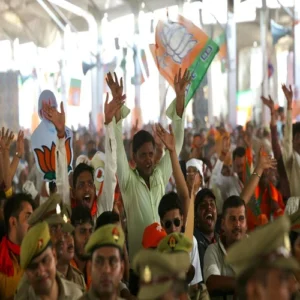
The West Bengal election 2026 is not just about which party won or lost. It is about how a society evolves.
From ideology to welfare to aspiration, each phase of Bengal’s political journey reflects the needs of its time. The current shift suggests that voters are increasingly focused on growth, accountability, and future opportunities.
This does not mean the past has been rejected. It means the future is being redefined.
Constitutional Turning Point: Mamata Banerjee’s Refusal to Resign and the End of an Era
The political drama surrounding the West Bengal election 2026 intensified dramatically in the days following the declaration of results. What had already become a historic election due to the Bharatiya Janata Party securing a decisive two-thirds majority turned into a constitutional and political spectacle after outgoing Chief Minister Mamata Banerjee publicly stated that she would not resign immediately from her post.
Her statement sparked intense national debate. Banerjee argued that the election outcome did not represent what she described as the “true public mandate,” suggesting that the political atmosphere surrounding the election remained deeply contested. Supporters viewed her stance as resistance against what they considered an unfair political environment, while critics interpreted it as an unwillingness to accept a clear electoral verdict.
For four days, uncertainty surrounded the political future of the state. The situation moved beyond ordinary post-election transition and entered the realm of constitutional discussion. Questions emerged around executive authority, gubernatorial powers, and the limits of political resistance within a parliamentary democracy.
The turning point came when Governor R. N. Ravi formally dissolved the West Bengal Cabinet and Legislative Assembly under Article 174(2)(b) of the Constitution. The announcement from Lok Bhaban stated that the dissolution took immediate effect, bringing an official end to the outgoing government’s tenure and clearing the path for the formation of a new administration.
This moment carried enormous symbolic weight. Bengal, a state historically dominated by ideological and regional political forces, was now preparing to witness its first BJP-led government after decades of resistance to the party’s expansion in the region.
At the same time, the constitutional aspect of the event became a subject of nationwide attention. Legally, the Governor’s decision fell within the framework of constitutional authority. Politically, however, it reflected the extraordinary intensity of the transition taking place in Bengal. The episode highlighted the delicate balance between electoral mandate, constitutional procedure, and political legitimacy.
As discussions unfolded, attention quickly shifted toward the formation of the new government. The BJP announced that the swearing-in ceremony would take place on May 9, signaling the beginning of a completely new political chapter in West Bengal.
Initially, several prominent leaders were considered for the Chief Minister’s post, including state BJP president Samik Bhattacharya, Union minister Sukanta Majumdar, and former Rajya Sabha MP Swapan Dasgupta. However, political momentum increasingly centered around Suvendu Adhikari, whose role in the BJP’s rise in Bengal had already become central to the election narrative.
Days later, Suvendu Adhikari was formally named the next Chief Minister of West Bengal, confirming what many political observers had anticipated after the BJP’s sweeping victory. His elevation symbolized more than a leadership change—it represented the consolidation of the BJP’s emergence as the dominant political force in the state.
For many supporters of the BJP, this moment represented the culmination of years of political struggle and organizational expansion. For supporters of the TMC, it marked the end of an era defined by welfare politics, emotional connection, and strong regional identity.
Beyond party politics, however, the episode revealed something deeper about modern Indian democracy: elections today are not just contests for power—they are battles over perception, legitimacy, and narrative. The events following the Bengal election showed how political transitions can evolve into constitutional moments, where legal procedure and public emotion intersect in powerful ways.
In the broader context of the West Bengal political shift 2026, the refusal to resign, the Governor’s intervention, and the eventual appointment of Suvendu Adhikari together became symbolic of a state undergoing one of the most dramatic political transitions in its modern history.
A State Redefining Its Future
The West Bengal election 2026 is not just about which party won or lost. It is about how a society evolves.
From ideology to welfare to aspiration, each phase of Bengal’s political journey reflects the needs of its time. The current shift suggests that voters are increasingly focused on growth, accountability, and future opportunities.
This does not mean the past has been rejected. It means the future is being redefined.
Political change does not begin in rallies or campaigns.
It begins quietly—in homes, in conversations, and in the expectations people carry.
And when those expectations change, everything else follows.
Final Thought
Political change does not begin in rallies or campaigns.It begins quietly—in homes, in conversations, and in the expectations people carry.And when those expectations change, everything else follows.
Good summary 👍well said regarding Bengal elections